
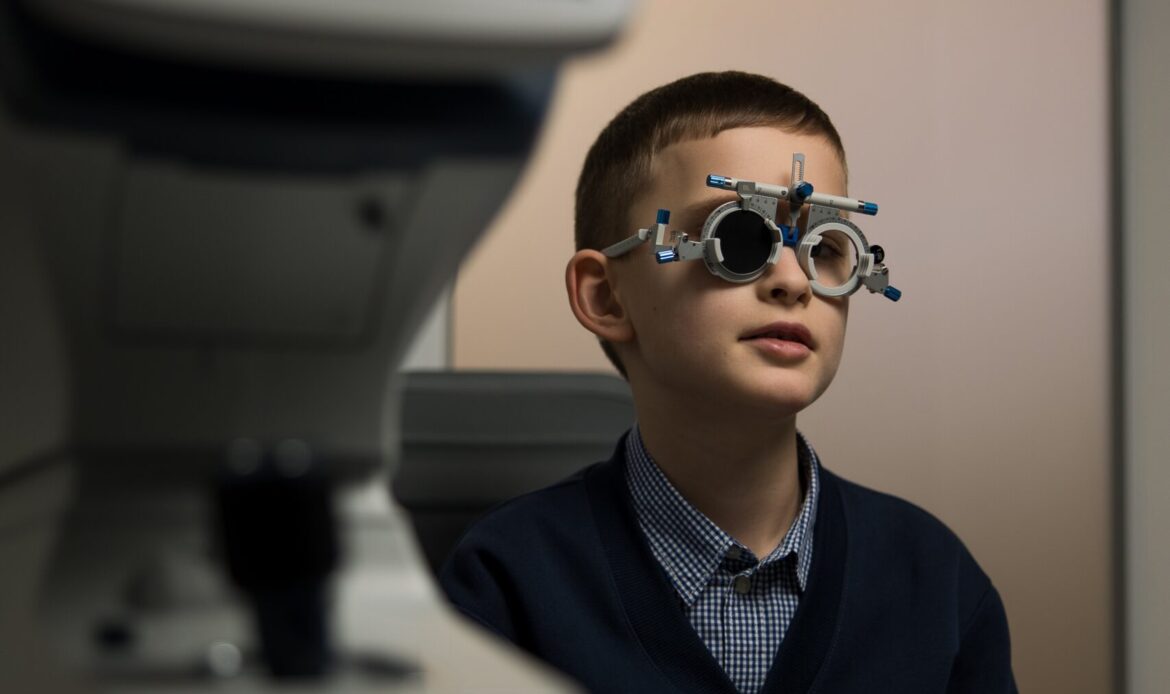
Vision is one of the most important senses from birth. It affects a child’s development, learning, and social interaction, which is why early diagnosis and prevention are crucial.
There are specific age periods when a visit to an ophthalmologist is mandatory:
- at 1 and 6 months;
- at 1 year;
- at 3 years;
- at 6–7 years, before starting school,
And thereafter annually, or more often if recommended by the doctor.
Regular check-ups help detect problems at early stages and begin treatment when it is most effective. This makes it possible to treat the condition or at least significantly slow its progression.
What should parents pay attention to?
From birth, a baby does not yet have stable visual fixation. It begins to develop around 1 month of age, initially focusing on large objects. By 3 months, the child can fixate on smaller objects and starts to follow them with their eyes. If this does not occur, parents are advised to consult an ophthalmologist as soon as possible. A visit is also recommended if the child shows signs of eye misalignment or holds toys too close to their face. By 6 months, a child begins to recognize their parents, and by 1 year, the visual system is largely developed, although binocular vision continues to mature later.
Diagnostic scope and timing vary with the child’s age.
| Age | What is checked |
|---|---|
| 0–2 months |
First check (in the maternity hospital): absence of congenital eye pathologies; 1–2 months: light perception, fixation of objects in the form of light. |
| 6 months |
tracking objects; recognizing faces; approximate binocular vision. |
| 1 year |
refraction; fundus examination (if necessary). |
| 3 years |
refraction and visual acuity; presence of binocular vision; eye movement range; presence or absence of strabismus; fundus examination with pupil dilation (if necessary). |
| 6–7 years |
refraction and visual acuity; presence of binocular vision; eye movement range; presence or absence of strabismus; fundus examination with pupil dilation; accommodation reserve. |
The most common eye conditions in infants include:
Nystagmus (involuntary eye movements).
Ptosis (drooping of the eyelids).
Dacryocystitis (inflammation of the tear sac).
Other common eye conditions include:
Amblyopia (“lazy eye”): appears between 3 and 5 years and responds well to treatment up to age 9.
Strabismus: can be detected as early as 6 months or later, around 2–3 years. Treatment is most effective before ages 5–6.
Refractive errors (myopia, hyperopia, astigmatism): often go unnoticed at first and may remain asymptomatic until 3–5 years.
Congenital cataract and glaucoma: appear in the first months of life. Early treatment is essential to prevent long-term vision problems.
Which other symptoms should prompt an unscheduled visit to the doctor?
Redness or excessive tearing (may indicate inflammation or infection).
Frequent squinting or rubbing of the eyes (can be due to visual fatigue or a more serious condition).
Tilting the head to one side or covering one eye.
After an eye or head injury.
It is important to remember that children usually do not complain themselves, as they may not recognize the problem or know how to describe the symptoms. Therefore, careful observation of their condition is essential.
Frequently Asked Questions:
At the “Prostir Zoru” clinic, we see children from the age of 3. Consultations are provided by a pediatric ophthalmologist and orthokeratology specialist who can find an approach to any child, even the most demanding one.
Comprehensive diagnostics;
Selection of optical correction (glasses/soft contact lenses);
Orthokeratology therapy;
Device-based vision therapy;
Consultation with a strabismus surgeon;
Surgical treatment of strabismus.
The doctor will take a medical history and ask about any complaints.
They will perform a series of tests to ensure a comprehensive diagnosis.
If necessary, they will refer you for additional examinations, which can be completed the same day.
Based on the collected data, the doctor will establish a diagnosis and provide a consultation report with a further treatment and follow-up plan.
Initial pediatric consultation – 800 UAH
Selection of optical correction – 400 UAH
Additional examinations:
Optical coherence tomography – 800 UAH
- Corneal topography – 800 UAH
You can book an appointment through the website or by phone via the contact center. If you have any concerns about your child’s condition, it’s best to schedule a consultation as soon as possible.
At the “Prostir Zoru” clinic, experienced specialists from various fields know how to approach young patients and will carefully conduct a comprehensive examination to provide parents with complete information about their child’s eye health.
Take care of your child’s eye health today — book a consultation now.
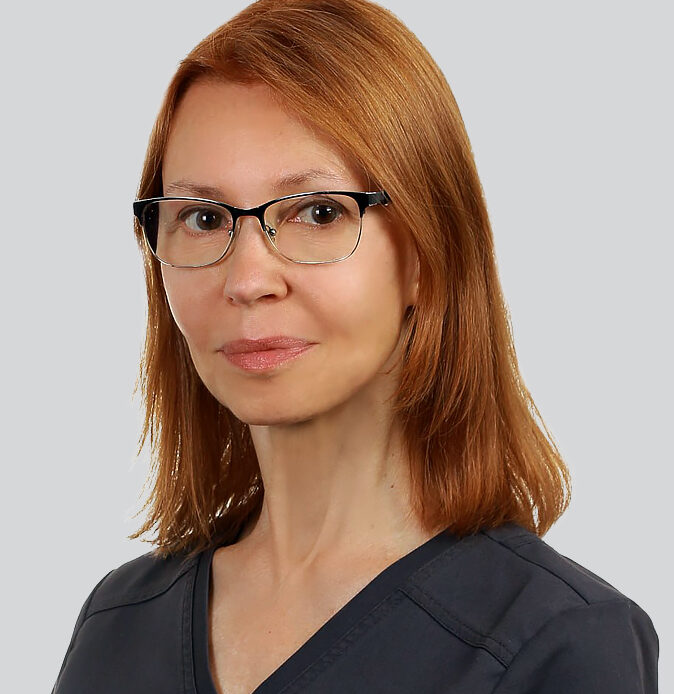
Kushnir Nataliya
Ophthalmologist, Candidate of Medical Sciences