

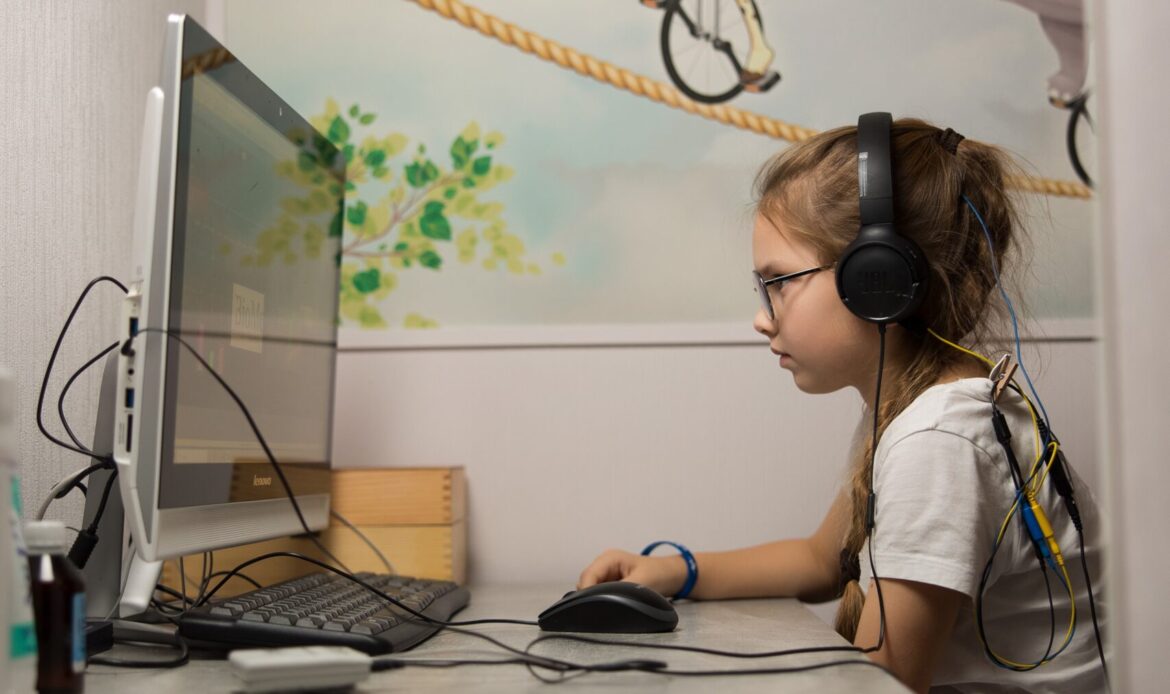
Each year, the strain on vision increases rapidly, and this is not always the fault of parents or children — almost every aspect of our daily lives is connected to gadgets. However, during childhood, the visual system is still actively developing and is not yet able to withstand heavy strain. That is why parents should carefully monitor their child’s screen time.
Recommended screen time for different age groups:
| Age | Recommendations |
|---|---|
| 0-2 years | It is necessary to completely exclude gadgets from a child’s life. Physical activity and communication with family are of the greatest importance. |
| 2-5 years | No more than 1 hour under parental supervision. After screen time, it is advisable to switch attention to creative or physical activities. |
| 6-10 years | Up to 2 hours per day, preferably used for something beneficial or educational. Regular breaks are also necessary. |
| 11-14 years | Up to 3-5 hours per day for productive use (studying, homework), обязательно with breaks. For passive content consumption (TikTok, Reels, games) – up to 1.5 hours. At this age, school workload significantly increases, so make sure the child gives their eyes enough rest. |
| 15-18 years | Considering the realities of modern life, it is difficult to name an exact number. Mandatory breaks during gadget use and a balance with physical activity are essential. |
Regular check-ups help detect problems at early stages and begin treatment when it is most effective. This makes it possible to treat the condition or at least significantly slow its progression.
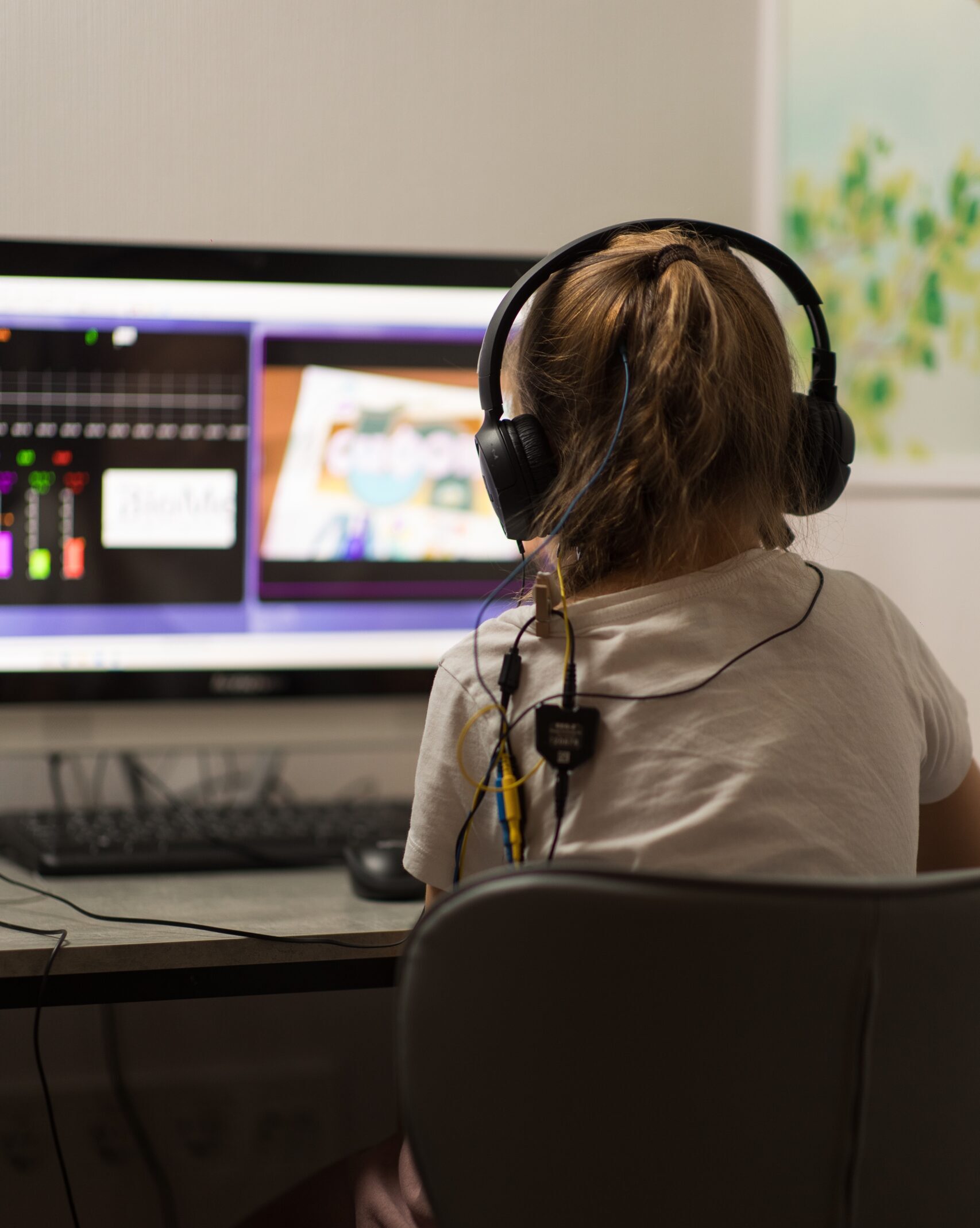
Important points:
Make sure to take regular breaks. Follow the 20-20-20 rule: every 20 minutes, look at something at least 20 feet (6 meters) away for at least 20 seconds.
Ensure your child maintains a proper distance between their eyes and the screen: at least 30 cm from a phone and 50 cm from a computer screen. If they cannot see clearly at this distance, it’s a reason to consult an ophthalmologist.
Balance screen time with physical activity. If a child constantly switches between using a phone for studying and then for entertainment, this creates prolonged and intense strain on the visual system. Encourage activities that allow the eyes to rest.
Practice digital hygiene. Teach your child not to start or end the day with a phone. It’s best to put it away at least one hour before bedtime, which will also significantly improve sleep quality. Establish a household rule of not bringing phones to the table — no gadgets during meals.
If you want to reduce your child’s screen time, setting parental controls on their phone is not enough. Encourage activities that don’t involve gadgets: sports, drawing, music, active or board games, and spending time with friends and family.
Remember that the best example is you. It will be easier for your child to accept limits if they feel it’s a shared commitment rather than a rule imposed only on them.
If you notice your child frequently squints, rubs their eyes, complains of headaches, or leans close to the screen, book a consultation at the clinic Prostir Zoru. Our specialists will conduct a careful examination and provide recommendations for both treatment and digital hygiene.

Kushnir Nataliya
Ophthalmologist, Candidate of Medical Sciences