

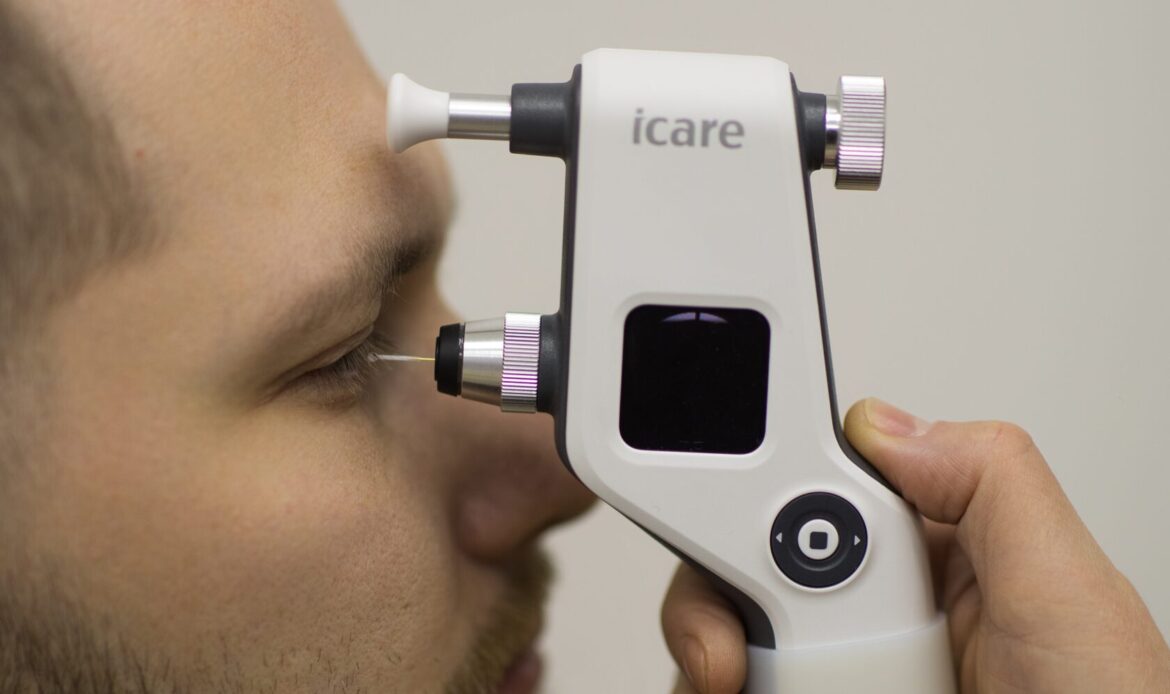
Glaucoma is a chronic eye disease characterized by increased intraocular pressure (IOP) and gradual damage to the optic nerve. If treatment is not started at an early stage, this process can lead to irreversible vision loss.
In Ukraine, glaucoma is one of the leading causes of blindness and disability. Thousands of new cases are recorded each year across all age groups, but people over 40 are the most vulnerable. That’s why annual eye exams are extremely important, as the disease is often asymptomatic in its early stages.
It is important to understand that glaucoma cannot be completely cured, but there are various methods to control intraocular pressure. The best results are achieved through a combination of medication (eye drops) and laser treatment.
At the “Prostir Zoru” clinic, we value your time, comfort, and health. Laser procedures are performed using the Vitra 810 surgical laser from the French company Quantel Medical.
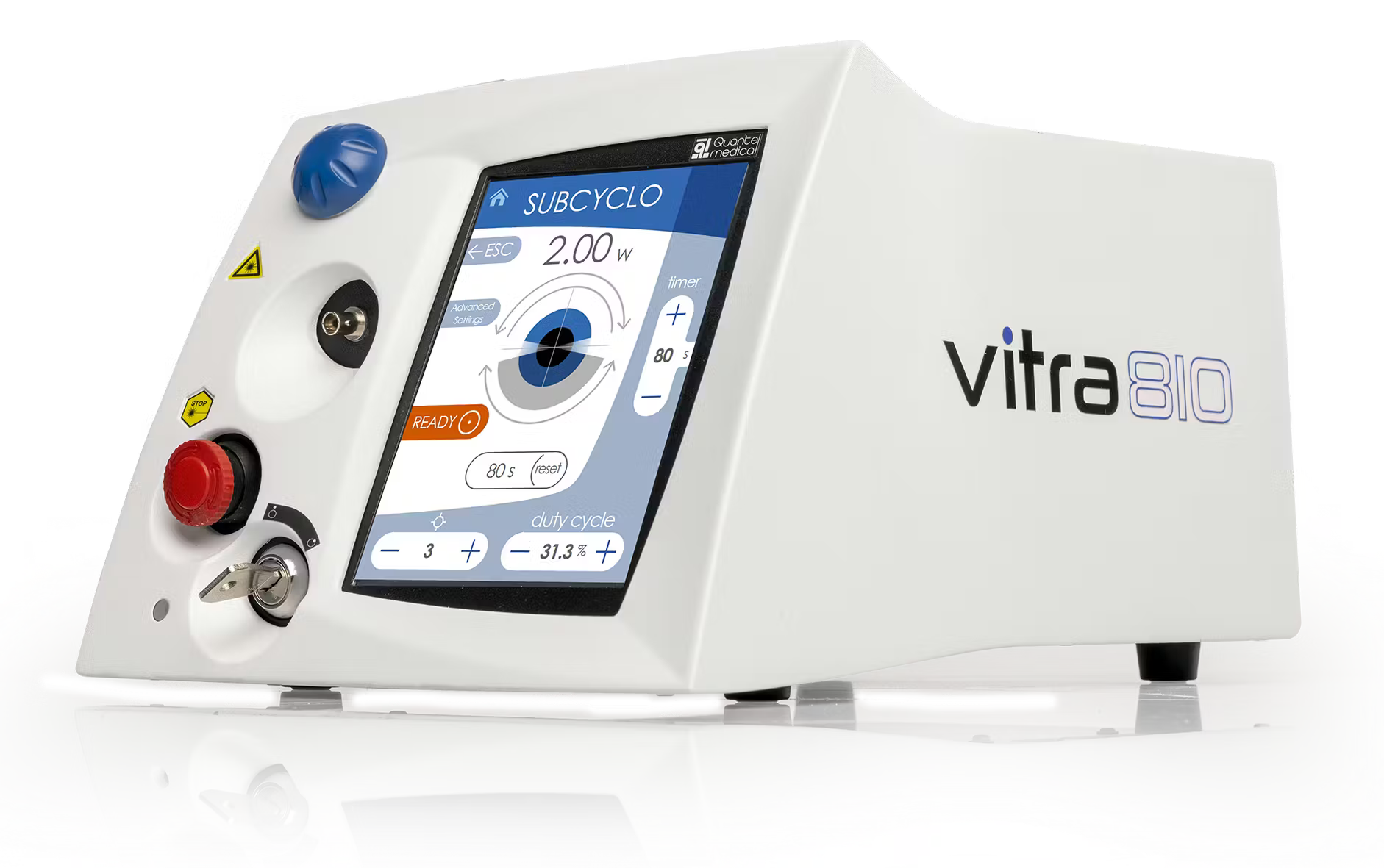
The Vitra 810 is a multifunctional laser platform with a wavelength of 810 nm. The device is notable for its compatibility with various radiation delivery systems, allowing it to be used not only for glaucoma treatment but also for retinal photocoagulation. It can be connected to a slit lamp, an operating microscope, or laser probes.
The infrared wavelength provides deep penetration into the eye tissues, reaching the ciliary body — the structure responsible for producing intraocular fluid. This procedure requires no incisions, making it a more comfortable intervention with easier recovery. The system’s interface allows the doctor to precisely control the laser power, minimizing human error during the operation. Additionally, this laser can be used at various stages of the disease, and it is no longer considered a “last resort” treatment.
The Vitra 810 laser has 2 modes:
- SubCyclo (subliminal/micro-pulse mode);
- ThermoCyclo (threshold/thermal mode).
The SubCyclo mode is a gentle micro-pulse setting that reduces intraocular pressure without causing thermal damage to tissues, which is especially important for elderly patients. The pulses are separated by pauses, allowing the tissue to cool down — hence it is referred to as a “cold laser.”
The SubCyclo mode helps improve the eye’s natural drainage pathways for intraocular fluid. Unlike older methods, this laser does not cause irreversible damage to ocular structures, allowing repeat treatments if needed without additional risk.
The ThermoCyclo mode is a continuous-wave setting based on the principles of classic transscleral cyclophotocoagulation (TS-CPC). Significant reduction of intraocular fluid production is achieved by destroying part of the ciliary body.
Due to its destructive nature, the ThermoCyclo mode is usually considered a therapy for patients with end-stage disease or refractory glaucoma, when other methods are no longer effective. This mode is more powerful and is intended to help in complex, terminal cases, providing rapid relief from severe pain and critically high intraocular pressure.
Main indications for laser treatment:
- Primary open-angle and closed-angle glaucoma.
- Pseudoexfoliative and pigmentary glaucoma.
- Neovascular glaucoma.
- Post-surgical glaucoma: cases where a previous anti-glaucoma procedure (e.g., trabeculectomy) was ineffective or scarring of the drainage pathways occurred.
- Glaucoma after vitreoretinal surgery: due to increased intraocular pressure following the introduction of silicone oil into the eye.
- Secondary glaucoma: caused by inflammation (uveitis) or prolonged use of steroid medications.
- Contraindications for intraocular surgery: for patients whose overall health (age 70+, cardiovascular diseases) makes invasive surgery under anesthesia inadvisable.
So, to summarize:
| SubCyclo | ThermoCyclo | |
|---|---|---|
| Mechanism | Micro-pulse (SubLiminal) | Continuous Wave |
| Effect on tissue | Stimulation without destruction | Thermal destruction |
| Purpose | Improving outflow, regulating secretion | Radical suppression of moisture secretion |
| Indications | Early, moderate, advanced stages of glaucoma | Refractory and terminal glaucoma |
| Safety level | High, minimal risk of vision loss | Moderate, possible side effects |
Since laser treatment is non-invasive and performed on an outpatient basis, postoperative recovery is short, and the patient can return to normal activities within 24–48 hours. However, it is very important to follow the doctor’s recommendations and continue using hypotensive eye drops. The doctor will provide guidance on physical restrictions, hygiene, and protection after the procedure.
For relatives of elderly patients, it is important to monitor the schedule of eye drop administration and follow-up visits, as this period is crucial for achieving long-term treatment results.

Kushnir Nataliya
Ophthalmologist, Candidate of Medical Sciences