

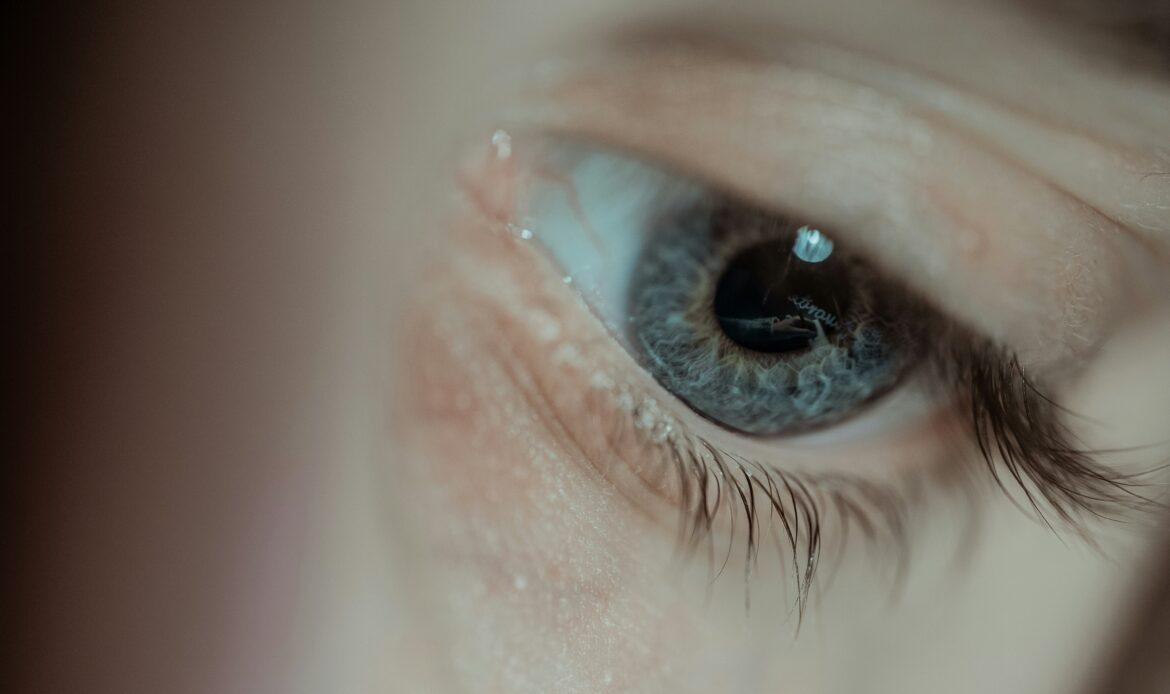
A person blinks on average every 4–6 seconds. This action serves a protective function: it shields the eye from dust and wind and evenly distributes the tear film across the surface of the eye, preventing the cornea from drying out. This is possible thanks to the complex structure of the eyelid – each of its layers is responsible for a separate part of this process.
The outside of the eyelid is covered by the thinnest skin on the human body, with muscles beneath it that provide movement. The meibomian glands are largely responsible for the tear film they are located within the cartilage of the eyelid (the tarsal plate) and produce meibum, a fatty (or lipid) secretion. The inside of the eyelid is lined with the conjunctiva a mucous membrane that extends onto the eye and, together with the eyelid, forms a protective barrier against infections.
What eyelid diseases are there?
The most common group of eyelid diseases is associated with inflammation of the eyelid margins and the glands located there.
Blepharitis
Blepharitis is a chronic inflammation of the eyelid margin caused by excessive accumulation of bacteria and sebaceous gland secretions. It manifests as itching, burning, redness, and the formation of scales at the roots of the eyelashes. An unpleasant feature of blepharitis is that it cannot be completely cured it can only be kept under control with regular eyelid hygiene and warm compresses. In the absence of an acute inflammatory process, a doctor may also prescribe intense pulsed light therapy (IPL therapy). Interestingly, blepharitis often becomes a “gateway” to other problems styes and chalazia most commonly develop against its background.
Stye (hordeolum)
Stye (hordeolum) is an acute bacterial infection of an eyelash follicle. Unlike blepharitis, treatment usually lasts 1–2 weeks.
Chalazion
Chalazion may look similar to a stye at first glance, but it has a different cause. It is not an infection, but a blockage and chronic inflammation of a sebaceous (meibomian) gland. If a stye is a quick “flare-up,” a chalazion is a slower process that may sometimes require surgical treatment. An important point: if a chalazion repeatedly appears in the same place, a malignant process should be ruled out.
This group also includes meibomian gland dysfunction (also known as posterior blepharitis) and inflammation of the lacrimal drainage system conditions in which either the production or drainage of secretions essential for a healthy ocular surface is impaired.
Mechanical eyelid disorders
This group includes conditions in which the normal position, shape, or mobility of the eyelid is impaired.
Ptosis (blepharoptosis) is drooping of the upper eyelid, which can be:
- congenital (due to an underdeveloped levator muscle);
- acquired most commonly due to age-related stretching of connective tissue.
In adults, this is primarily an aesthetic and functional problem that is treated surgically. In children, however, congenital ptosis is a condition that requires timely attention. If the eyelid covers the pupil, the brain may “stop” processing the image from that eye. This can lead to strabismus or persistent vision loss.
Ectropion and entropion are two opposite conditions.
- in the first case, the eyelid margin turns outward (causing dryness and irritation due to incomplete eyelid closure),
- in the second case, it turns inward, causing the eyelashes to rub against the cornea.
Both conditions are more common in older adults due to loss of tissue elasticity and, in most cases, can only be definitively corrected surgically.
Trichiasis is abnormal growth of the eyelashes toward the eye. Constant rubbing against the cornea can damage it, so eyelashes that repeatedly grow in the wrong direction are sometimes removed using electrolysis.
It is also worth mentioning blepharospasm involuntary contractions of the eyelid muscles. A mild form can occur in anyone due to stress or lack of sleep, but there is also a chronic bilateral form (benign essential blepharospasm) associated with dysfunction of the brain’s basal ganglia. In severe cases, it can cause the eyes to close so frequently that a person becomes functionally blind, even though the eyes themselves are healthy. Treatment involves botulinum toxin therapy, which helps relax the eyelid muscles.
Neoplasms: from harmless to those requiring monitoring
Benign growths can appear on the eyelids, just like on any other area of the skin nevi (moles), seborrheic keratoses, and xanthelasmas (yellowish plaques associated with cholesterol levels). In most cases, they are harmless, but they may be removed if they interfere with vision or cause aesthetic concern.
The situation is more complicated with malignant tumors:
- Basal cell carcinoma is the most common eyelid cancer, accounting for more than 90% of all malignant tumors in this location. It rarely metastasizes, but it can invade surrounding tissues, making early detection critically important.
- Squamous cell carcinoma is much less common (less than 5% of cases) but behaves more aggressively.
- Sebaceous carcinoma is an insidious “chameleon”: it can mimic an ordinary chalazion or blepharitis, which is why diagnosis is delayed by an average of 1–3 years.
- Eyelid melanoma is the rarest, but also the most dangerous of all.
To summarize: how are eyelid conditions treated?
Treatment of eyelid diseases largely depends on the nature of the problem:
- inflammatory conditions – hygiene, warm compresses, anti-inflammatory ointments;
- mechanical disorders (ptosis, ectropion, entropion) – usually require surgical correction, while conservative methods (eye drops, ointments) only provide temporary symptom relief;
- neoplasms – monitoring or surgical removal, depending on the type and size;
- oncological conditions – surgery with reconstruction and, in some cases, radiation therapy.
One interesting fact to finish with
Perhaps the most unexpected thing about the eyelids is how closely they are connected to the nervous system, not just to the eye itself. The same blepharospasm that may begin as a “nervous eye twitch” can, in its chronic form, turn out to be a neurological disorder associated with the function of deep brain structures the basal ganglia. Unilateral eyelid twitching can also sometimes be an early sign of a brain tumor or irritation of the facial nerve, which is why neurologists may order an MRI of the brain in such cases. In other words, the eyelid is not simply a “curtain” for the eye, but a kind of indicator that can sometimes signal processes occurring far beyond the orbit.

Kushnir Nataliya
Ophthalmologist, Candidate of Medical Sciences