

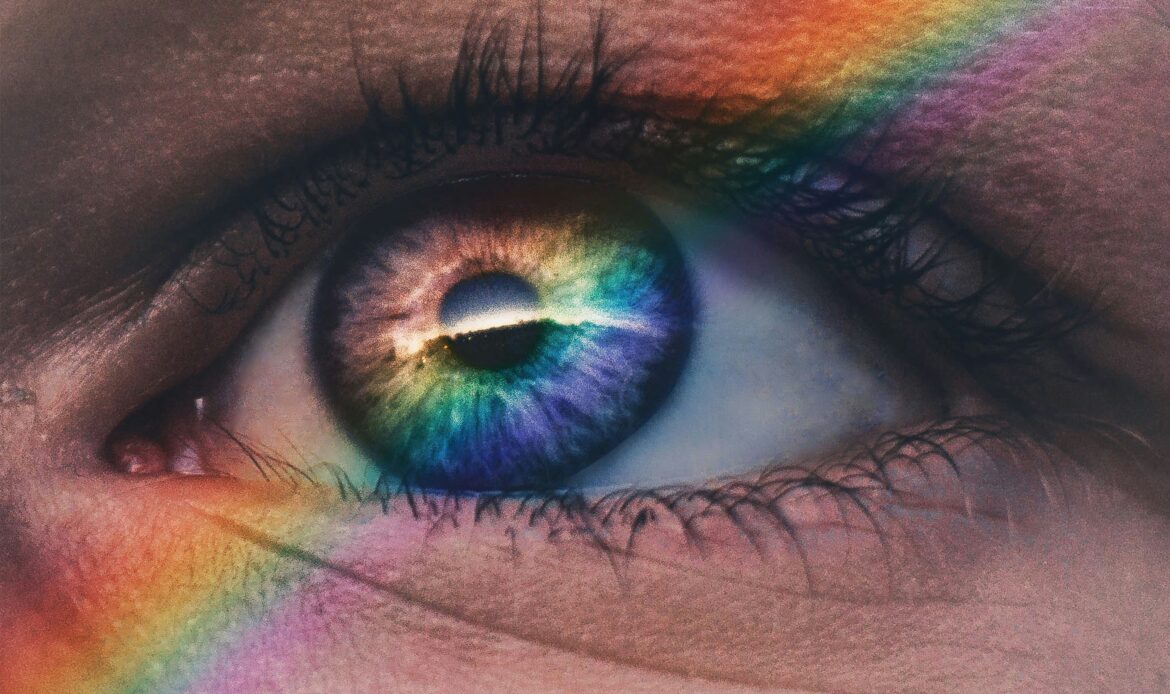
There are many structures in the human body that we only think about when something goes wrong. Some of them are so familiar that we hardly ever think about why they are needed. The iris is one of them.
We usually perceive it simply as “eye color,” describe its shades, and admire it. But at the same time, it is living tissue that regulates the amount of light entering the eye every moment by changing the size of the pupil.
What is it?
Iris is a thin – circular structure at the front of the eye that surrounds the pupil and determines its visible color. It is located between the anterior and posterior chambers of the eye and separates them. It consists of connective and muscle tissue and contains blood vessels, nerve fibers, and the pigment melanin. The amount and distribution of melanin, as well as the structural characteristics of the tissue, determine the color of the iris.
All these components provide its structure and function. The pattern is highly individual: even identical twins have distinct iris patterns.
The iris helps regulate the amount of light that enters the eye. It contains two muscles whose contraction and relaxation change the diameter of the pupil. This creates characteristic grooves and folds on the surface of the iris, known as contraction furrows. This allows it to function like the diaphragm of a camera: in bright light, the pupil constricts, while in low light, it dilates.
What are the characteristics of iris color?
The color of the iris primarily depends on the amount and distribution of the pigment melanin. The way light interacts with the structures of the iris also plays an important role. That is why there are no separate “blue,” “gray,” or “green” pigments in the iris – these colors are formed through a combination of pigmentation and the way light is scattered within the tissues of the iris.
- Blue. Low melanin levels, so the effect of light scattering is more pronounced.
- Gray. A similar principle, but different optical properties and iris structure, result in a gray appearance.
- Green. This is an intermediate variant: more pigmentation than in blue eyes, but not enough to produce a brown color. The coloration of green irises is usually uneven – the shades range from light green to olive, and brown or golden areas may sometimes be visible.
- Brown. There is significantly more melanin here, which absorbs more light, so the iris appears brown. Sometimes it can even appear almost black.
There are many intermediate shades and combinations between the main colors. For example, the iris may have different colors in its central and peripheral parts. It is also possible to have a partial or complete combination of different iris colors – heterochromia. This is a fairly rare phenomenon: its exact prevalence worldwide has not yet been established.
It is worth noting that iris color is a complex polygenic trait, rather than a simple inheritance pattern in which “brown dominates over blue.” Numerous genetic variants are involved in determining eye color, including genes associated with the production and distribution of melanin.
Can the iris develop dseases?
Yes. Various ophthalmic diseases can be associated with the iris: some directly affect the iris itself, while in others, features of its structure may, in some cases, also influence the course of other eye conditions. In particular:
- Iris injuries. A blow or penetrating eye injury can cause tears in the iris, changes in the shape of the pupil, or detachment of the iris from its root. In the presence of pronounced symptoms, surgical reconstruction of the iris may sometimes be performed.
- Iris coloboma. It is a congenital tissue defect that can cause the pupil to have an unusual shape. In some patients, it does not require treatment, but if there is significant light sensitivity or other problems, surgical correction may be considered.
- Inflammatory diseases of the iris: iritis and iridocyclitis. They are forms of uveitis and may be accompanied by pain, redness, photophobia, and changes in the pupil. Treatment is generally medication-based rather than surgical.
- Angle-closure glaucoma. In some cases, the peripheral part of the iris blocks the outflow of aqueous humor, causing increased intraocular pressure.
How is it treated?
Treatment of iris diseases is always tailored individually and may be conservative, laser-based, or surgical.
- Medication therapy (eye drops and medications) is usually used to reduce inflammation.
- Laser technologies are effective in treating glaucoma. Depending on the mechanism, laser iridotomy or laser iridoplasty may be used.
- Surgical interventions. In cases of complex injuries or pronounced congenital defects, the following may be performed:
- iridoplasty – microsurgical reconstruction of the tissues;
- pupilloplasty – restoration of the correct shape, size, and central position of the pupil.
- Artificial iris implantation – in the most complex cases.
The choice of the optimal method is made exclusively by the doctor after a comprehensive examination, so if any discomfort occurs, it is important to seek medical attention promptly.
What is normal and what should you pay attention to?
Changes in eye color during childhood.
In children, iris color can change noticeably during the first year of life. The appearance of a difference in eye color in adulthood may be a sign of pathological changes and requires evaluation by an ophthalmologist.
The iris can serve as a kind of diagnostic “clue.”
During an eye examination, an ophthalmologist may notice changes in the iris and other eye structures that can help raise suspicion of certain diseases. For example, in some hereditary conditions, such as neurofibromatosis type 1 (characterized by Lisch nodules). Certain changes in the eye structures may help raise suspicion of a disease and determine the need for further examination.
There are diseases in which the iris literally changes its appearance.
For example, in Fuchs uveitis syndrome, iris atrophy and a difference in eye color may gradually develop. Moreover, the condition may remain almost asymptomatic for a long time.
Interesting fact about the iris:
Because the iris pattern is extremely complex, it is used in biometric identification systems. A special algorithm analyzes the features of the iris pattern, converts the information into a digital template, and compares it with stored data. Even identical twins have different iris patterns, which is why this type of identification is considered one of the most reliable.

Kushnir Nataliya
Ophthalmologist, Candidate of Medical Sciences